
A mentorship program is a structured initiative that pairs employees with more experienced colleagues who guide their long-term growth, skills and career development through regular conversations.
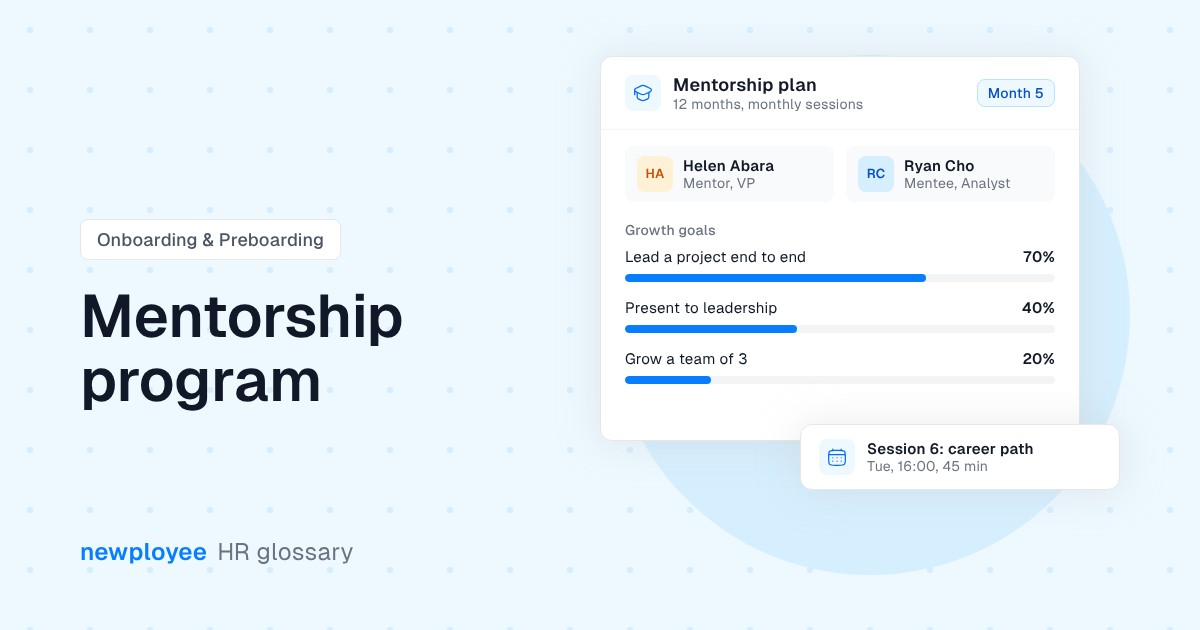
A mentorship program is a structured way to pair employees with more experienced colleagues, called mentors, who help them grow. The person being guided is the mentee. They meet regularly to talk about skills, career goals, challenges and ideas.
Mentorship is about the long term. A mentor does not manage the mentee's daily work. Instead, they share experience, give honest advice and help the mentee think through decisions about their career.
People want to grow at work, and many leave when they feel stuck. A mentorship program gives employees a clear path to learn from someone who has been where they want to go. That can support employee retention and help people move into new roles through internal mobility.
Mentorship also helps the company keep what experienced people know. When mentors share lessons and shortcuts, it becomes a natural form of knowledge transfer. Mentors benefit too. Explaining their work to someone else helps them sharpen their own thinking and build leadership skills before they manage a team.
Most mentorship programs follow a simple cycle:
Example: a junior data analyst at a 300-person retailer wants to move into product management in a few years. Through the company's mentorship program, she is paired with a senior product manager from another department. They meet for an hour each month. Over the year, he reviews her first product proposal, invites her to a planning session and helps her prepare for an internal interview.
A buddy program helps new hires settle in during their first weeks or months, with a peer who answers everyday questions. A mentorship program focuses on long-term career growth, is open to employees at any stage, and the mentor is usually more senior. Many companies run both: a buddy for the first 90 days, set up through their onboarding software, and a mentor once the new hire is settled and ready to plan their growth.
Most formal programs run for six to twelve months. Many pairs keep meeting informally after that if the relationship is working well.
Anyone with useful experience and a real interest in helping others grow. Mentors are often more senior, but peer and reverse mentoring, where a junior employee teaches a senior one a new skill, also work well.

Transform onboarding, offboarding, and everything in between with newployee. Schedule your personalized demo today!
Schedule a demo